
Speech therapy, in motion.
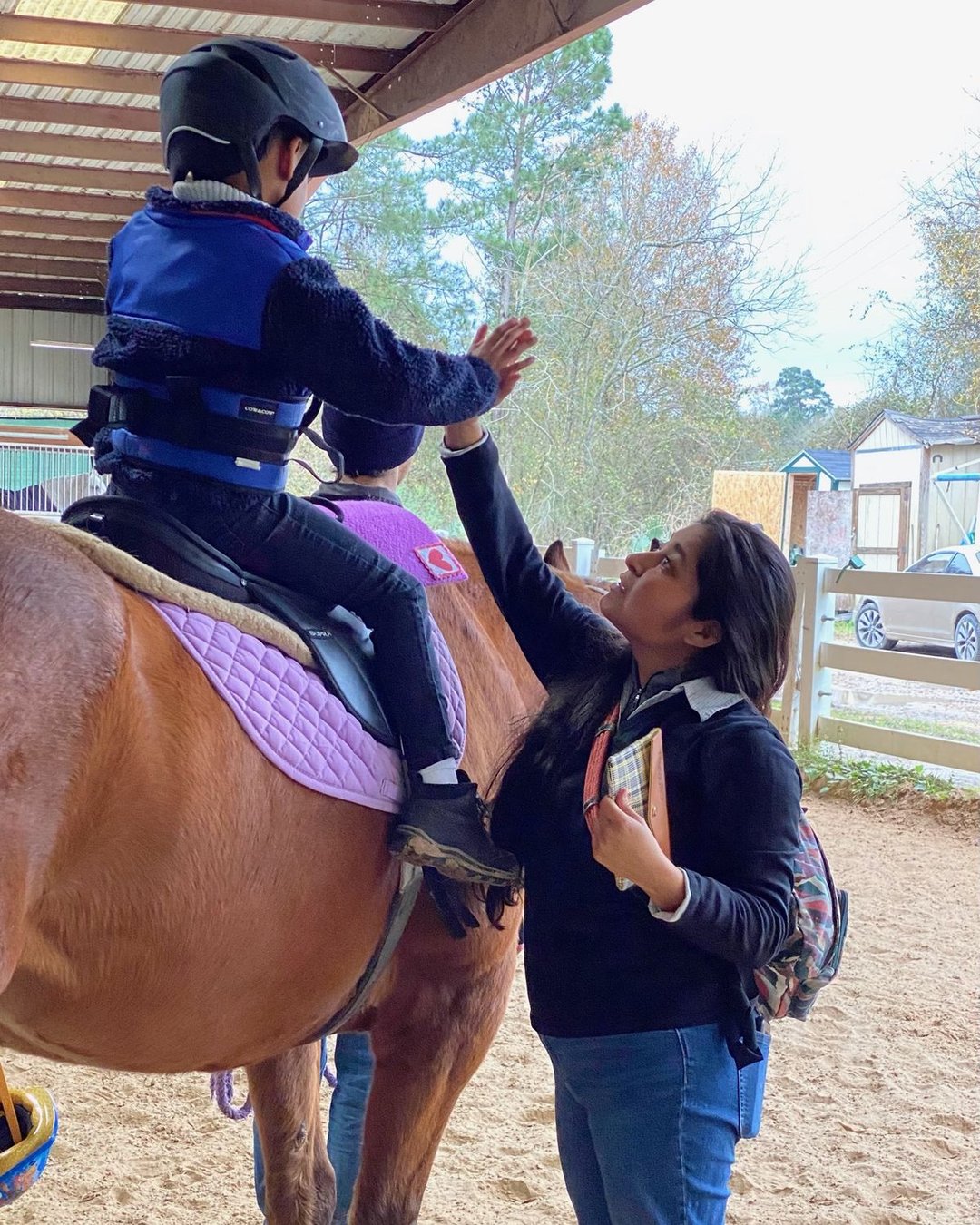
Hippotherapy uses the movement of a horse as a treatment tool inside a speech therapy session. Your child's speech-language pathologist plans and leads every minute, while the horse's walk prepares the body, the senses, and the breath for communication.
Sessions take place at SIRE Therapeutic Horsemanship in Fulshear.
The movement
Why the horse?
A horse's walk moves the rider's pelvis forward and back, side to side, and in rotation, in a pattern remarkably close to the way a person's pelvis moves when walking. That movement is rhythmic, repetitive, and three-dimensional, and the rider's body answers it with a small adjustment on every stride, hundreds of times a session.
By changing the horse's speed, direction, and stride, and the child's position in the saddle, we control exactly how much challenge and how much calm the body receives.
Benefits
What the ride builds.
The horse does not do the therapy. It changes what your child's body brings to it. These are the gains we work toward, session by session.
Regulation
The steady rhythm of the walk helps many children settle into a calm, alert state, so attention and new words come more easily.
Postural control
Every stride asks the trunk to adjust and stay upright, building the core stability that clear speech depends on.
Breath support
An active, upright trunk steadies the breath: a stronger voice, longer phrases, and less running out of air.
Oral motor control
With the body stable, the jaw can stop bracing, and the lips and tongue can move with more independence and precision.
Rhythm and timing
The horse's even, four-beat walk is a built-in metronome for pacing syllables, words, and phrases.
Engagement
Many children who resist the therapy table come alive at the barn, with natural reasons to request, comment, and connect.
Sensory integration
A calm, ready body comes first.
On horseback, three sensory systems work at once:
- Vestibular: balance and movement, sensed by the inner ear.
- Proprioceptive: body position, sensed by the muscles and joints.
- Tactile: touch, from the warmth and texture of the horse.
Sensory integration is the brain's ability to organize all of that input into a calm, alert, ready-to-learn state.
Regulation comes before communication. A child who is overwhelmed or under-aroused cannot easily attend, imitate, or try new words. A slow, steady walk tends to organize and settle; halts, transitions, and changes in pace can wake up a child who needs more input. We use these on purpose, so the language work lands when the nervous system is ready.
Proprioception
Knowing where your body is.
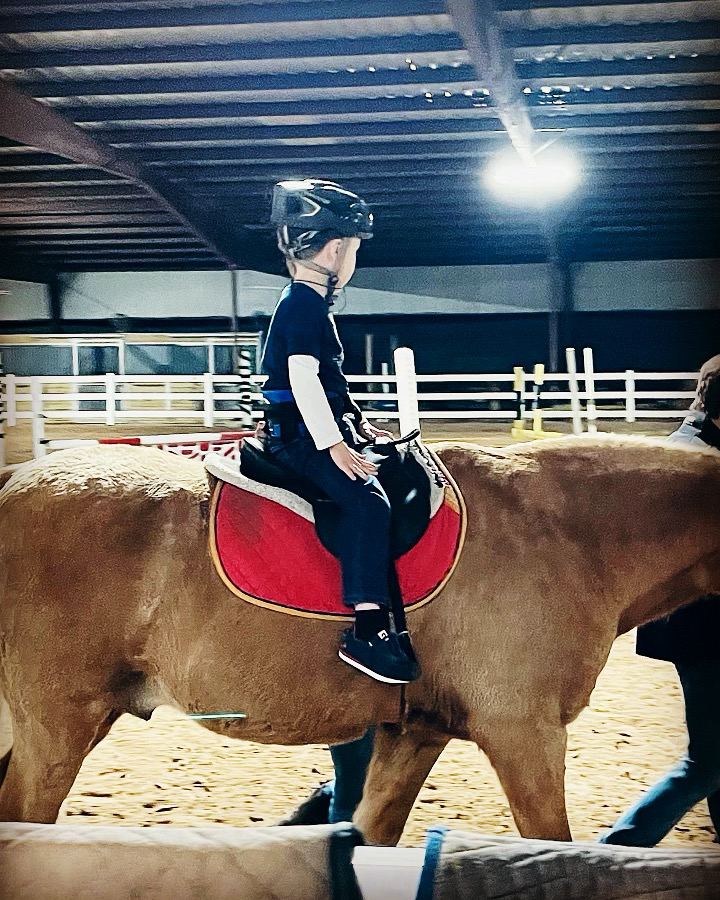
Proprioception is the body's internal map. The horse supplies a continuous stream of deep input through the hips and trunk, and every stride asks the child to find midline and stay there.
Many children who struggle with clear speech also have a hazy sense of where their jaw, lips, and tongue are. Sharpening the body's overall awareness gives us a stronger starting point for that precise oral work.
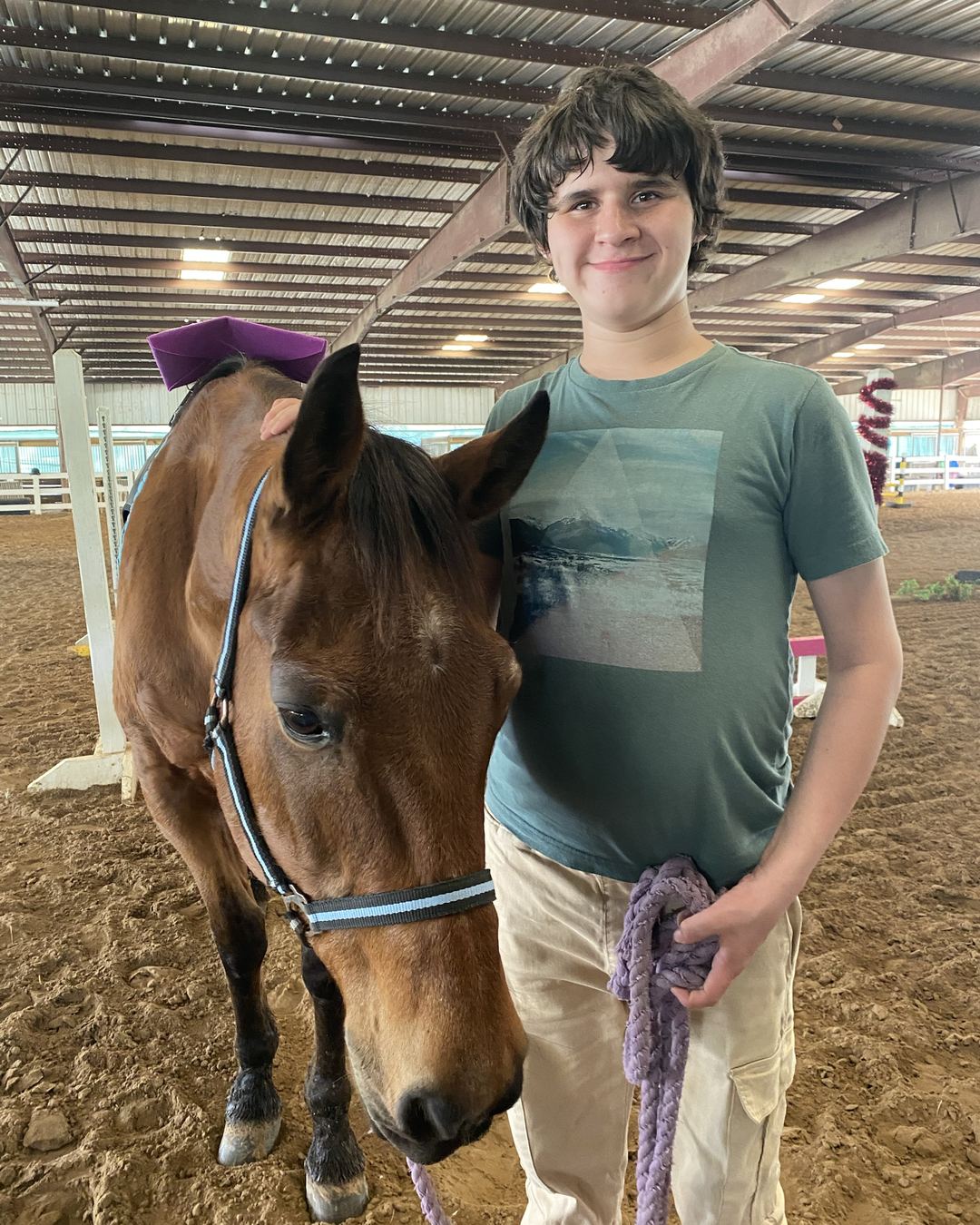
The work starts on the ground. Leading, brushing, and carrying tack are heavy work: deep muscle input that helps organize the body before a child ever climbs into the saddle.
Core, breath, and speech
From the core to the mouth.
Movement specialists rely on a basic principle: proximal stability for distal mobility. Precise movement at the end of a chain depends on a stable base, and for speech, the mouth is the end of that chain.
When the trunk is unstable, children compensate. They brace the jaw, let the mouth hang open, hike their shoulders, or hold their breath, and each of those patterns gets in the way of clear speech. Riding builds upright postural control from the pelvis up, freeing the jaw, lips, and tongue to move independently and precisely.
The core also powers the voice. Speech is shaped breath, and the trunk muscles and diaphragm control how steadily that breath flows. Better trunk control means stronger breath support: a louder voice, longer phrases, and less running out of air. The horse's even four-beat walk works as a built-in metronome, so we pair syllables, words, and phrases with the rhythm of the stride.
- PelvisThe horse's walk moves it forward and back, side to side, and in rotation, just as walking does.
- Trunk and coreAnswer every stride with a small adjustment, building stability and steady breath.
- Head and neckRise over a stable trunk, giving the jaw a steady base.
- JawStops bracing, so it can open and close in small, controlled steps.
- Lips and tongueMove on their own, quickly and precisely.
- VoiceBreath, shaped into words.
A session
What a session looks like.
Your child wears a fitted helmet, a trained handler leads the horse, and side walkers stay alongside for safety. We build each session around your child's own goals, such as:
- Requesting with words like “walk on,” “whoa,” and “more”
- Following directions and building vocabulary
- Practicing speech sounds timed to the stride
- Using AAC or signs from the saddle
Grooming and barn routines add natural, motivating reasons to communicate before and after the ride.
Who it helps
Children who often thrive here.
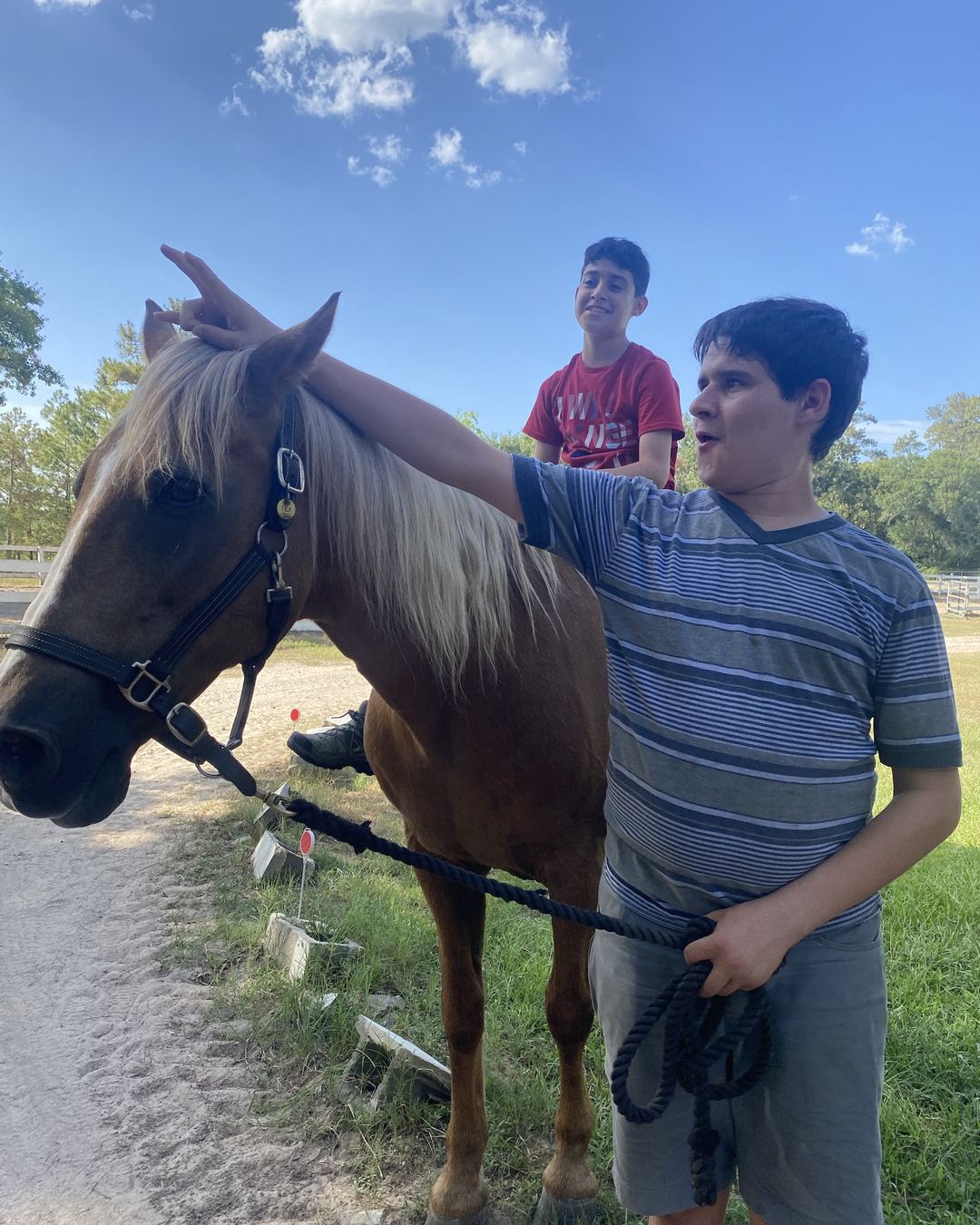
Hippotherapy can be a strong fit for children with these diagnoses and needs, and for children who have plateaued in table-based therapy or light up around animals.
Every child is screened before riding, and some medical conditions need clearance from your child's doctor first.
Our approach
Same goals, new ground.
Hippotherapy does not replace evidence-based speech therapy. It is a way to deliver it. The goals, data, and clinical decisions are the same ones behind every Polaris session; the horse simply gives us a body that is better prepared to learn.
Openings now
Ready to see your child in the saddle?
We have immediate openings in Fulshear. Reach out to ask about a screening and how sessions are billed for your family.